DORIS ALEXANDER THOMPSON:
PAINTER, LITHOGRAPHER, AND NOVELIST
Feature Exhibit, Figh-Pickett House
June 2nd through September 3rd
9 a.m. to 4 p.m. Tuesday through Thursday
Closed on Federal Holidays
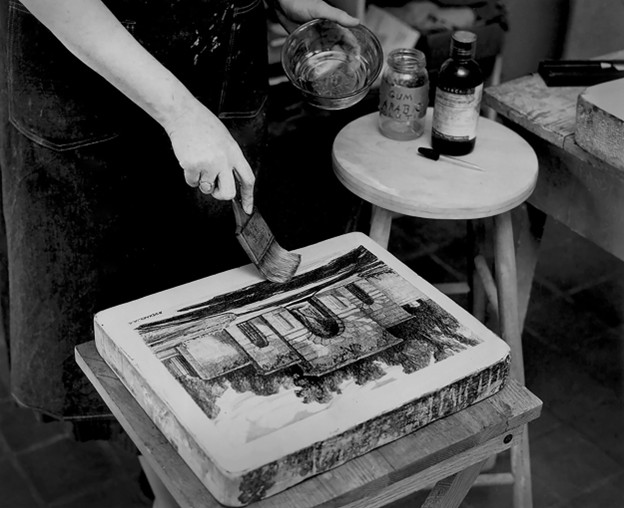
Photo Credit: Photograph from the Dixie Art Colony Foundation Archives, circa 1940s
Our second exhibit of the year, Doris Alexander Thompson: Painter, Lithographer, and Novelist, in partnership with the Dixie Art Colony Foundation, is a retrospective exhibition that highlights the life and work of Doris Alexander Thompson, a member of Alabama’s historic Dixie Art Colony. Thompson sketched, transferred compositions to stone, and created prints. Each lithograph from the original stone was unique and is considered original artwork.
With every exhibit, we strive to spark interest in Montgomery’s history and motivate members and visitors to explore local and regional historical sites and attractions.
MCHS thanks the following friends and partners for their exhibit contributions, temporary loans, and assistance in making this exhibit and programming possible: Alabama Humanities Alliance; Alabama State Council on the Arts; Beverly West Leach, Artist and Adjunct Professor in the Art and Design Department at Troy University; the City of Montgomery; Dixie Art Colony Foundation, led by Mark Harris; Jeff Dutton, Volunteer Preparator; and Travis Taylor, local artist.
EXHIBIT PROGRAMS & EVENTS
Unless otherwise noted, the programs listed are free and open to the public, thanks to support from the Alabama Humanities Alliance, Alabama State Council on the Arts, and the City of Montgomery. To register for free programs, please email aleahgoode@mchsal.org.
Feature Exhibit: Doris Alexander Thompson: Painter, Lithographer, and Novelist, on view June 2nd through September 3rd, Tuesday through Thursday from 9 a.m. to 4 p.m. Closed on federal holidays.
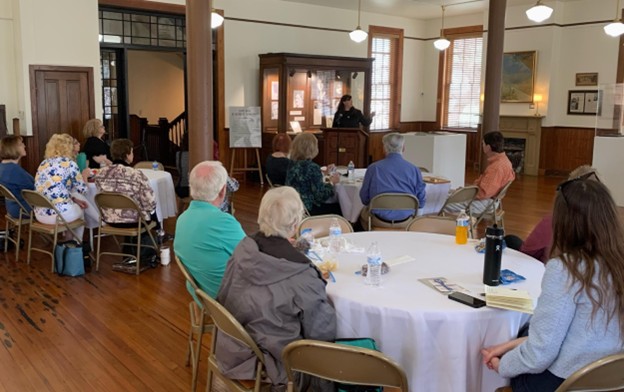
Annual Membership Meeting
Thursday, June 11, 4-5 p.m.
Report on the past year and a brief look at what is to come in 2027
Opening Reception
Thursday, June 11, 5-6:30 p.m.
Refreshments and beverages, mixing, and mingling
Brown Bag Lunch and Learn
Wednesday, July 16, from 11:30 a.m. to 1 p.m.
Feel free to bring your sack lunch and join us for a chat with Beverly West Leach, Artist and Adjunct Professor in the Art and Design Department at Troy University, who will share the process of stone lithography and showcase printmaking techniques.
Brown Bag Lunch and Learn
Wednesday, August 5, from 11:30 a.m. to 1 p.m.
Again, feel free to bring your sack lunch and join us as Mark Harris, Executive Director of the Dixie Art Colony Foundation, shares details of Doris Alexander Thompson’s life and technical process.
Stone Lithography Print & Stamp-making Art Session
WORKSHOP IS FULL AND CLOSED TO REGISTRATION
Thursday, August 13, from 10 a.m. to 2 p.m.
Enjoy morning coffee and juice at 10 a.m., as the day begins with an abbreviated Gallery Talk featuring the Doris Alexander Thompson exhibit, presented by Mark Harris, Executive Director of the Dixie Art Colony Foundation. The event will include a stone lithography demonstration led by Travis Taylor, a local artist, during which participants will have the chance to pull their own print. Participants will enjoy a bagged lunch from Scott Street Deli and be guided in creating a unique take-home stamp with a personal ink pad and beautiful papers.
Limited to 12 participants.
DORIS ALEXANDER THOMPSON
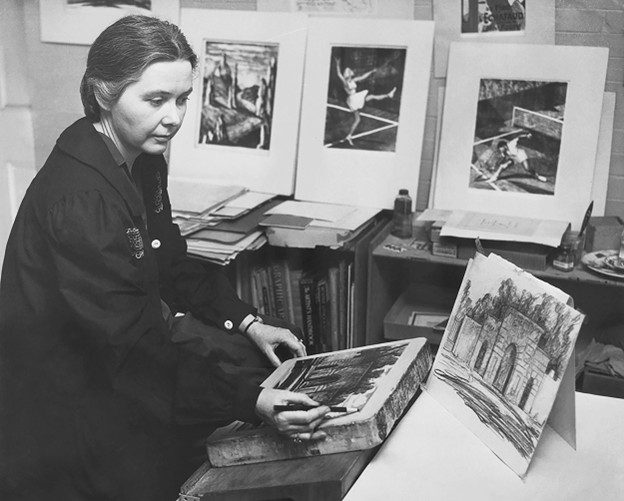
Photo Credit: Doris Alexander Thompson. Shown are three lithographs included in the exhibition. Photograph circa 1940s, from the Dixie Art Colony Foundation Archives.
Doris Alexander Thompson was born on March 2, 1906, in Mobile, Alabama. A portfolio of sketches she produced as a child shows her talent surfaced at an early age. Some of her earliest formal training was under the direction of celebrated Alabama artist Roderick Mackenzie, best known for his murals in the Alabama State Capitol.
She married the Rev. William Austin Thompson in 1932. Later, the couple settled in the Montgomery area, where her husband served as rector of the Episcopal Church of the Holy Comforter in Montgomery and as priest-in-charge at St. Mark’s Episcopal Church in Prattville. Along with Zelda Sayre Fitzgerald, she was a co-founder of the Montgomery Sketch Club, which met in the 1940s at the Episcopal Church of the Holy Comforter. Other charter club members associated with the DAC included Irma Steagall, Eloise Hawkins, Louise Horworth, Elizabeth Meclaft, Elizabeth Milner, and E. Herndon Smith. The group became known for its life-drawing sessions. Four life drawings by Doris Alexander Thompson are included in this exhibition. The importance of including life-drawing in the development of one’s artistic education should never be underestimated. Life-drawing is more than just drawing the human body; it’s a foundational skill that enhances all artistic work.
Before retiring in Magnolia Springs, Alabama, the couple also lived in Florence, Alabama, Philadelphia, Pennsylvania, and Columbia, South Carolina. While briefly living in Philadelphia, Alexander Thompson studied with Florence Tricker. She then entered the Art School of Temple University, where she studied lithography under the direction of Raphael Sabatini. After moving to Columbia, South Carolina, she returned to Philadelphia each summer to continue her studies with Sabatini. She also studied painting under the direction of Alexander Abels.
Alexander Thompson was a “true lithographer;” not only did she sketch her compositions, but she also transferred them to stone and pulled her own prints. Stone lithography, which uses limestone slabs, requires specialized training, skill, and talent. Each of Thompson’s lithographs printed from the original stone is unique and considered an original work of art.
Doris Alexander Thompson passed away on September 20, 1995, in Magnolia Springs, Alabama, at the age of 89.
Her Work
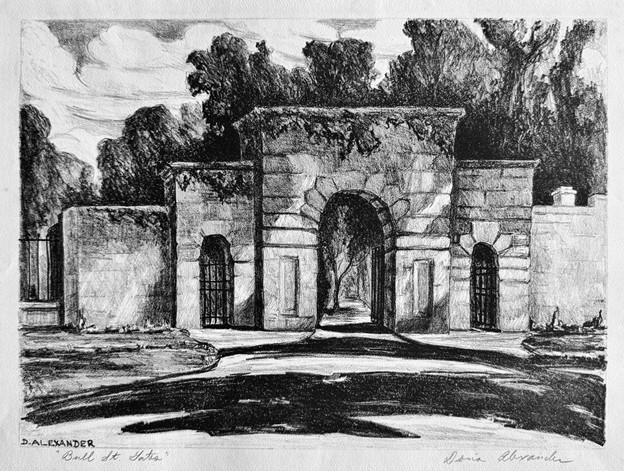
Photo Credit: DORIS ALEXANDER THOMPSON, "Bull Street Gates," stone lithograph, 10 x 13.5 inches | Gift of Foley Art Foundation and Holmes Medical Museum | DAT-2020.AW.0011
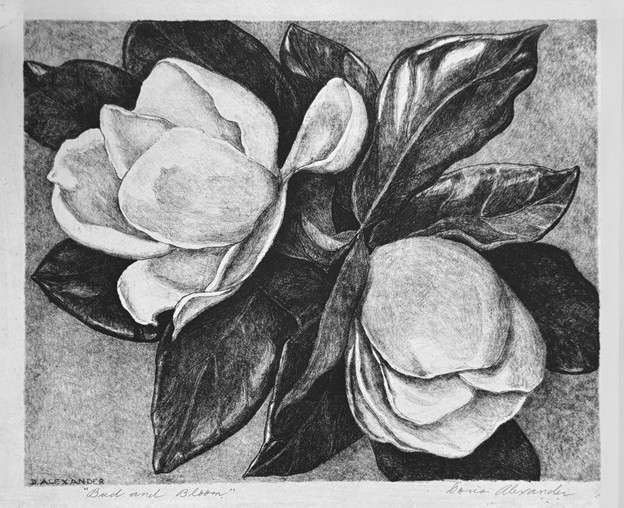
Photo Credit: DORIS ALEXANDER THOMPSON, "Buds And Blooms," stone lithograph, 12.25 x 13.75 inches | Gift of the Mobile Museum of Art | DAT-2022.AW.0010
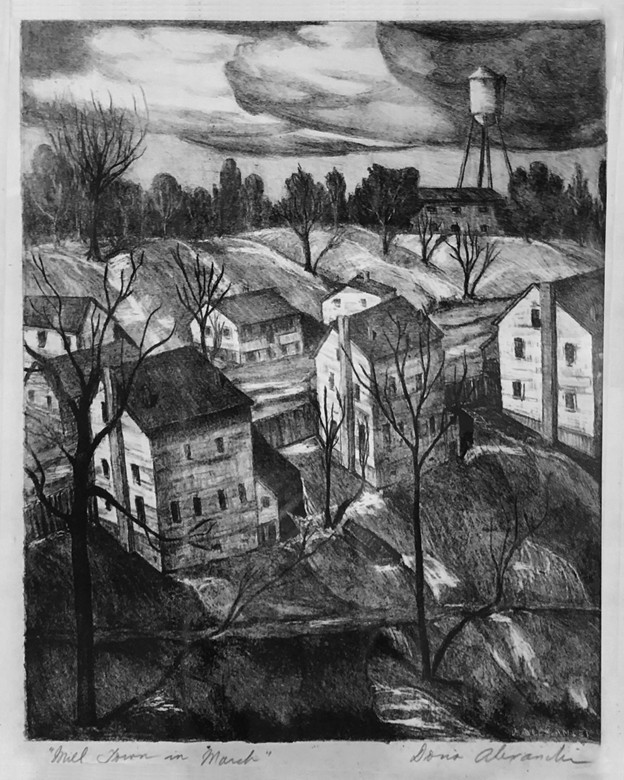
Photo Credit: DORIS ALEXANDER THOMPSON, "Mill Town In March," stone lithograph, 12.5 x 10.5 inches | Gift of Foley Art Foundation and Holmes Medical Museum | DAT-2020.AW.0011
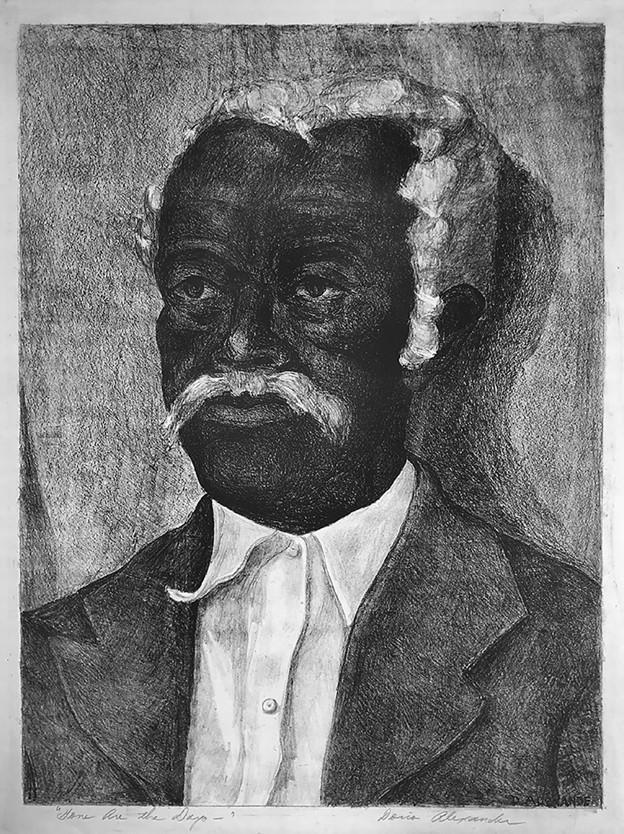
Photo Credit: DORIS ALEXANDER THOMPSON, "Gone Are The Days," stone lithograph, 18.5 x 13 inches | Gift of the Mobile Museum of Art | DAT-2022.AW.0003
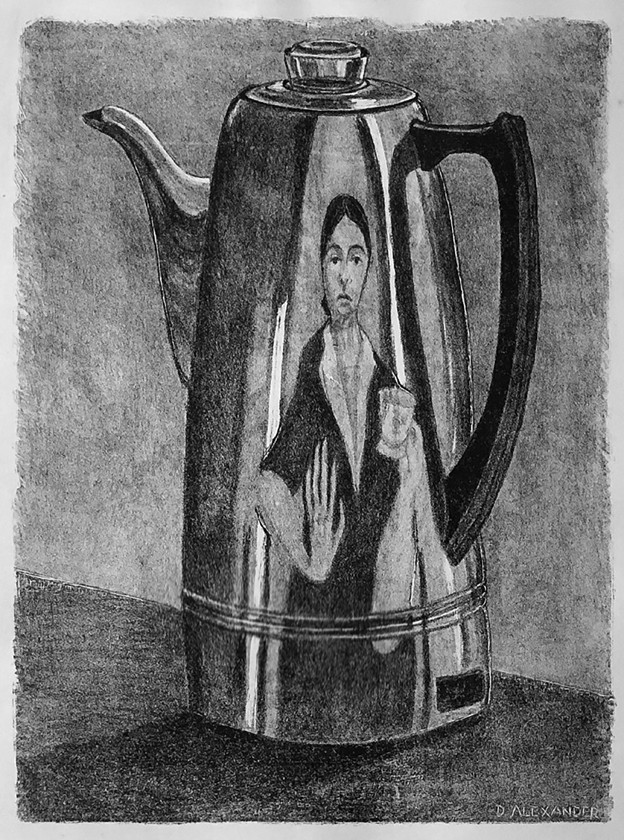
Photo Credit: DORIS ALEXANDER THOMPSON, "Morning Reflections," (Self-Portrait), stone lithograph, 13.25 x 9.5 inches | Gift of Foley Art Foundation and Holmes Medical Museum | DAT-2020.AW.0006
The works shown are examples of Thompson’s stone lithography. Additional works on display during the run of the exhibit, June 2 through September 3, 2026.
STONE LITHOGRAPHY: A NEAR-EXTINCT METHOD
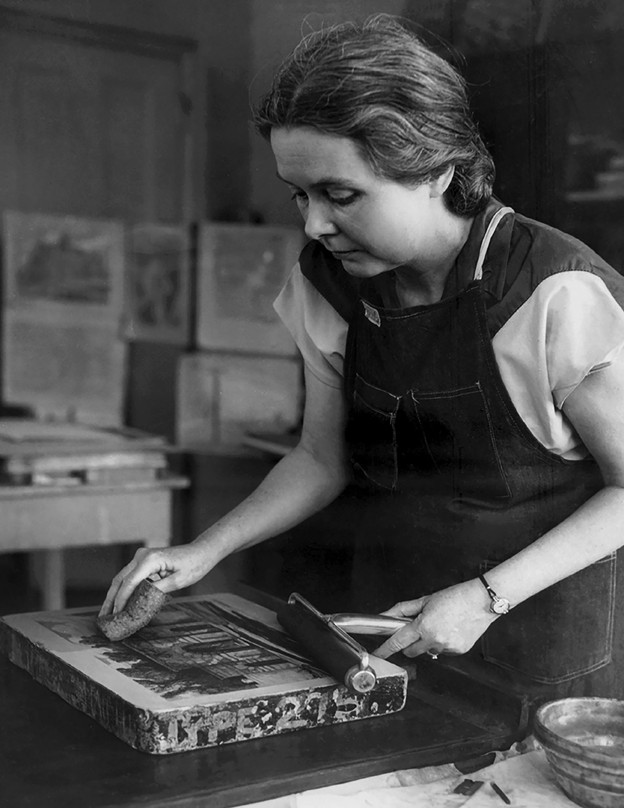
Photo Credit: Photograph from the Dixie Art Colony Foundation Archives, circa 1940s
Stone lithography was the first printmaking technology to allow an artist to work with traditional techniques and create prints that could rival an original painting in detail, mood, and color variations. Stone lithography was popular for about a century during the 1800s. Today, only a few artists still practice this near-extinct method of artistic expression. Four-color lithography is a very labor-intensive process that requires a separate drawing and stone for each of the four colors.
Stone lithography was invented in 1798. People used stone lithography to create color art for book illustration and for more common uses such as labels, flyers, and posters.
Basics of the Stone Lithography Process
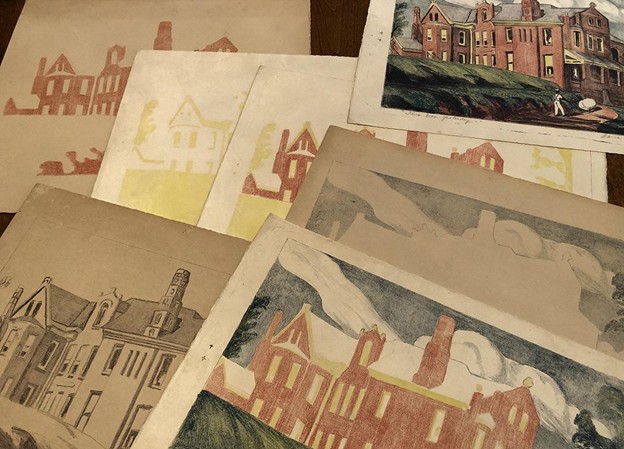
Photo Credit: Shown are original Doris Alexander Thompson color proofs from the DAC Foundation Archives.
Step 1: The artist creates a pencil sketch, then draws or paints the same image in reverse on a flat piece of limestone with a greasy substance. For example, a litho crayon is a soft, waxy/greasy crayon. There are also litho paints and pencils. The stone picks up this greasy substance and holds it.
Step 2: A variety of chemicals are applied, and the stone is moistened with water. The parts of the stone not protected by the greasy paint soak up the water.
Step 3: Oil-based ink is rolled onto the stone. The greasy parts of the stone pick up the ink, while the wet parts do not. A piece of paper is pressed onto the stone using a press, and the ink transfers from the stone to the paper. While multiple prints can be pulled from the stone, each is unique and considered an original work of art.

The Dixie Art Colony was an informal adult art camp that operated in the River Region from 1933 to 1948. The brainchild of John Kelly Fitzpatrick and Sally Boyd Carmichael, the colony produced and promoted many noted artists. Many of the Dixie Art Colony artists became best known for their colorful watercolor landscapes and still lifes, a style commonly referred to as regionalism.
The idea for the art colony was conceived around 1933 by Fitzpatrick and Carmichael, who envisioned it as a summer art school, an outgrowth of the school Fitzpatrick founded and directed at the Montgomery Museum of Fine Arts, referred to as the Montgomery Museum School. Sallie Carmichael and her husband, Malcom, provided financial and practical support for the gatherings, and Fitzpatrick served as the artistic director. The Carmichaels’ daughter, Warree Carmichael LeBron, who had studied under Fitzpatrick and elsewhere, also taught and served as a critic at the colony. The colony met in several locations over the years before finally establishing itself at the Carmichael family’s Lake Jordan property. While a few of the colonists hailed from outside the Deep South, due to limited advertising, most participants over the years were native Southerners. A few participants attended strictly for fun and were often referred to as “Sunday Artists;” however, some were career artists. Tuition was minimal ($15 per week or $25 for two weeks) and could be waived if a member was elevated to the level of critic for having work accepted at juried exhibitions. The colony’s only paid employees were a cook and a caretaker.
Research to preserve the colony’s legacy began in 2011 and is maintained and promoted by the Dixie Art Colony Foundation, incorporated in 2015 by Southern art historian Mark Andrew Harris. Harris catalogs paintings, archives newspaper articles and memorabilia, acquires works by colonists, curates exhibitions, and lectures on the subject. In August 2024, the foundation moved from its Wetumpka location to Prattville. In addition to the DAC Foundation’s ongoing exhibitions and lectures held at the Prattville Creative Arts Center, the foundation also holds lectures and exhibitions in other locations across Alabama and the Deep South. For more information, visit DixieArtColony.org.
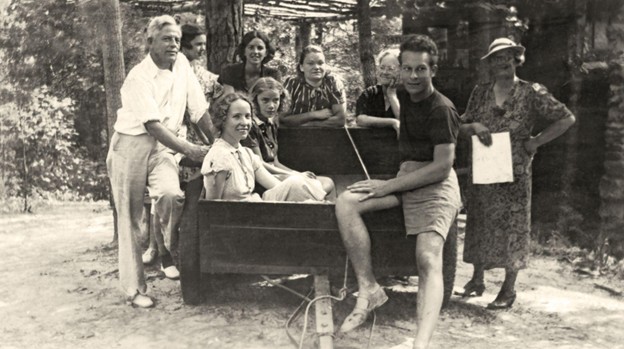
Photo of some of the original Dixie Art Colonists at Lake Jordan in 1938. The wagon was loaded with artists and supplies and used to transport artists to various locations around the property where they were dropped off to paint or sketch.