Exhibitions
ZELDA’S MUSES: THE WOMEN OF MONTGOMERY
Feature Exhibit, Figh-Pickett House
February 10th through April 30th
9 a.m. to 4 p.m. Tuesday through Thursday
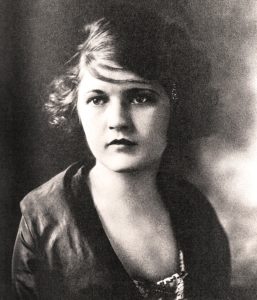
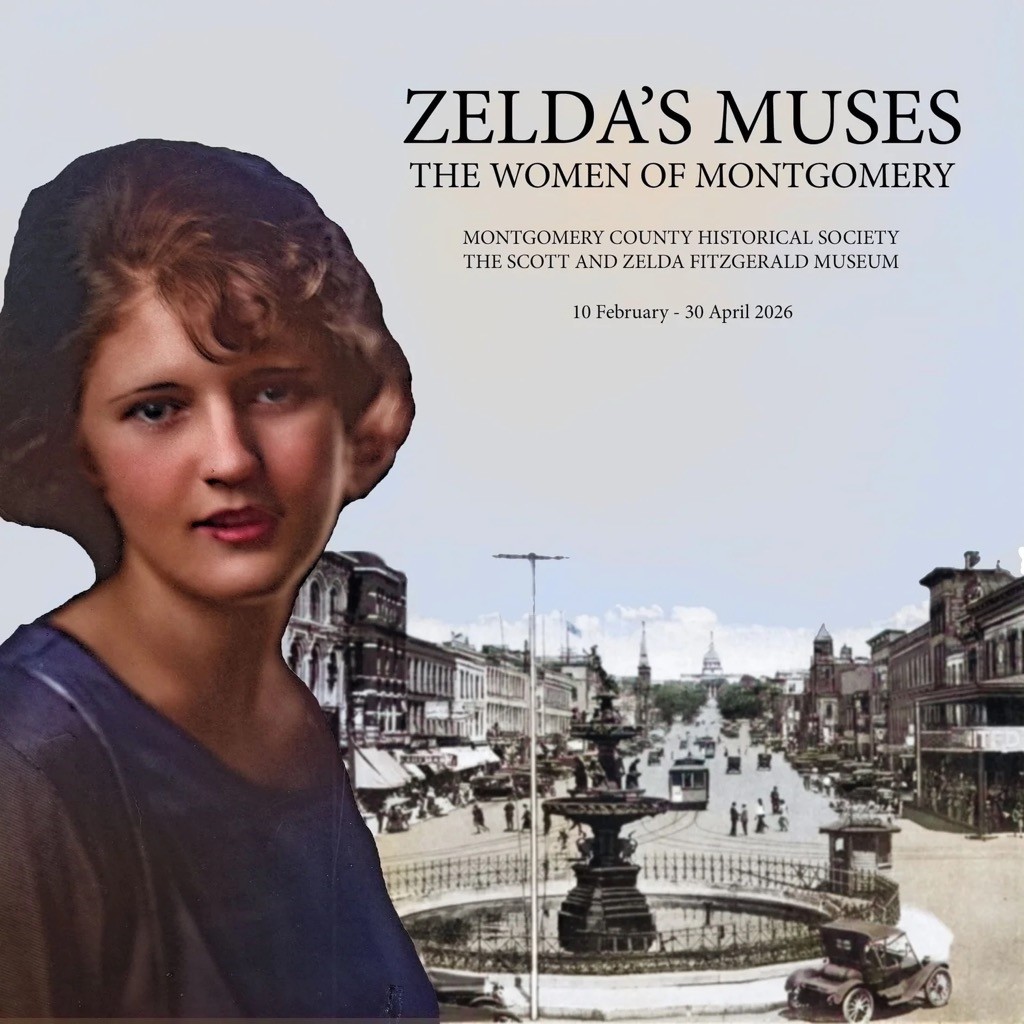
The first exhibit of the year, Zelda’s Muses: The Women of Montgomery, a collaboration with The Scott and Zelda Fitzgerald Museum and the Dixie Art Colony Foundation, explores Zelda Fitzgerald’s southern roots and the creative women who inspired and surrounded her. This exhibition illuminates how these women, as muses, mentors, and mirrors, fueled Zelda’s extraordinary spirit. In an era when women’s roles were rigidly defined, they collectively empowered her to challenge conventions, embrace creativity, and leave an indelible mark on American culture. Zelda’s muses remind us that behind every icon stands a constellation of women whose influence echoes through time.
With every exhibit, we strive to spark interest in Montgomery’s history and motivate members and visitors to explore local and regional historical sites and attractions.
MCHS thanks the following friends and partners for exhibit contributions and temporary loans: Alabama Humanities Alliance; Alabama Department of Tourism; Dr. Gerald A. Anderson II, Sandra Aplin, Booker T. Washington Magnet High School Art Students and Instructor Kaitlin Stanley; Alaina M. Doten, Executive Director, The Scott and Zelda Fitzgerald Museum; Jeff Dutton; Mark Harris, Director, Dixie Art Colony Foundation; The Montgomery Museum of Fine Arts; Myrtle Bowdoin Hutchings Family; Maire Martello; Nicrosi Family; The Montgomery Academy Art Students and Instructor Laura Bocquin; Percy Julian High School Art Students and Instructor Sharon Samples; Kaylin Rodriguez; The University of Alabama Archive; and USA TODAY NETWORK.
EXHIBIT PROGRAMS & EVENTS
Unless otherwise noted, the programs listed are free and open to the public, thanks to support from the Alabama Humanities Alliance and the Alabama Department of Tourism. To register for free programs, please email aleahgoode@mchsal.org.
Feature Exhibit: Zelda’s Muses: The Women of Montgomery, on view February 10 through April 30, Tuesday through Thursday from 9 a.m. to 4 p.m.
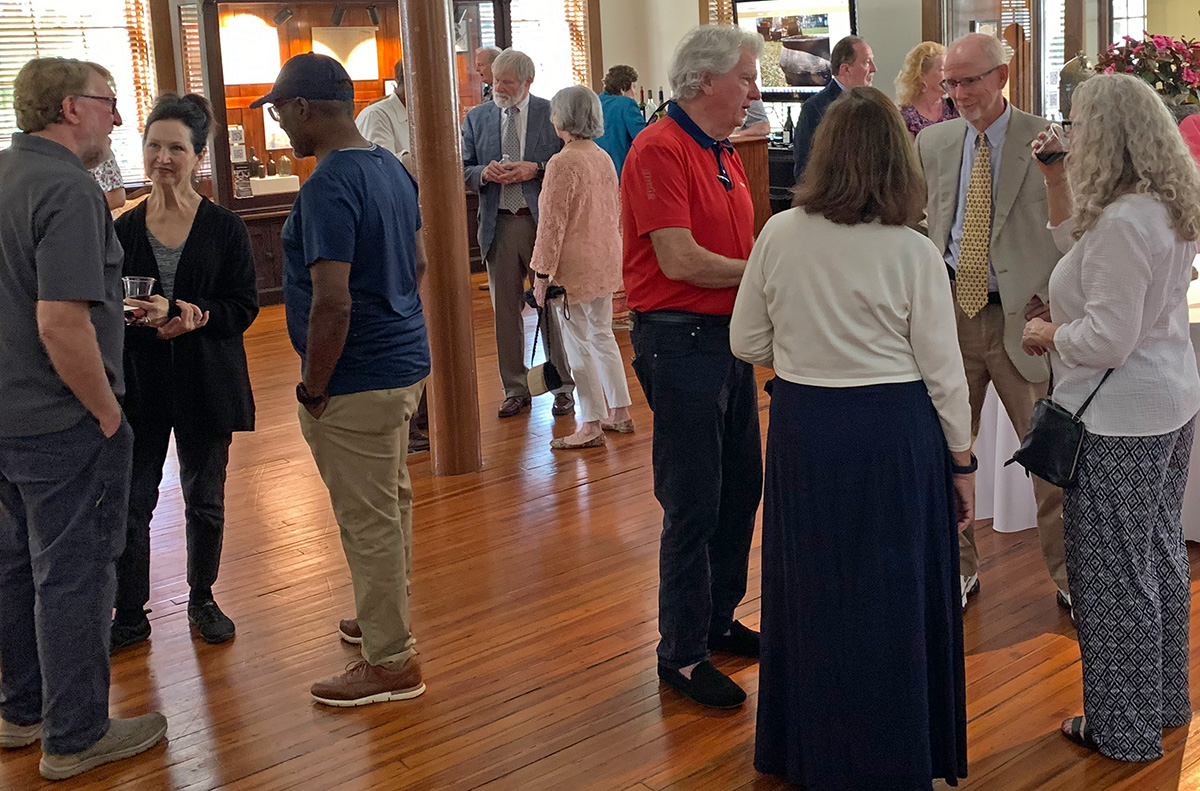
Feature Exhibit, Progressive Opening, Saturday, February 28, from 10 a.m. to 2:30 p.m. at the Figh-Pickett House and The Scott and Zelda Fitzgerald Museum.
Progressive Opening Schedule:
MCHS 10 a.m. to 12:30 p.m.
- 10-10:15 Coffee and Open Gallery
- 10:15-11:00 Gallery Talk, with Mark Harris, Director, Dixie Art Colony: Anne Goldthwaite + Q&A
- 11-11:15 Coffee and Open Gallery
- 11:15-12:15 Gallery Talk, with Alaina Doten, Executive Director, The Scott and Zelda Fitzgerald Museum: Sarah Mayfield’s Journey + Q&A
The Fitz 1 p.m. to 2:30 p.m.
- 1-2 Tea and Talk: Zelda at 40, with Maire Martello, Author and President of The Fitzgerald Museum, and Alaine Doten, Executive Director, The Scott and Zelda Fitzgerald Museum + Q&A
- 2-2:30 Tour of The Fitz
Brown Bag Lunch and Learn, Wednesday, March 11, from 11:30 a.m. to 1 p.m. at Figh-Pickett House. Feel free to bring your sack lunch and join us for a chat about Zelda and Anne Goldthwaite’s Time Together, by Alaine Doten, Executive Director, The Scott and Zelda Fitzgerald Museum.
Brown Bag Lunch and Learn, Wednesday, April 8,11:30 a.m. to 1 p.m. at Figh-Pickett House. Again, feel free to bring your sack lunch and join us for our final program in conjunction with this exhibition about Minnie and The Honeybees, by Alaina Doten, Executive Director, The Scott and Zelda Fitzgerald Museum.
THE CHARACTERS
The Sayres
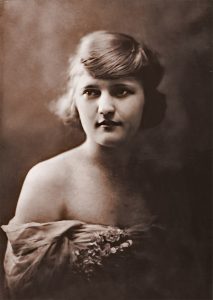
Zelda Sayre Fitzgerald
24 July 1900 – 10 March 1948
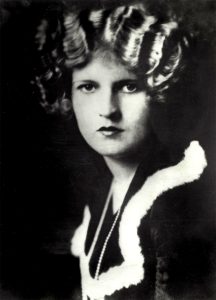
Zelda Sayre Fitzgerald is a defining icon of the 1920s and an enduring inspiration to women. Born on July 24, 1900, in Montgomery, Alabama, she was the youngest child of A.D. Sayre and Minnie Machen Sayre. Zelda challenged societal norms from a young age, climbing trees in bloomers and sneaking cigarettes. At Sidney Lanier High School, she was known for her bold behavior, including dancing on tabletops.
In July 1918, she met Lieutenant F. Scott Fitzgerald at a dance, and they married in April 1920. After years of European travel, they briefly returned to Montgomery from 1931 to 1932, living at 919 Felder Avenue while both worked on significant literary pieces. Although they never divorced, their relationship effectively ended in 1936 when Scott moved to Hollywood and Zelda remained at the Highland Hospital Sanitorium in Asheville. Months before Scott’s death in December 1940, Zelda returned to Montgomery, moving into her mother’s home on Sayre Street.
Minnie Buckner Machen Sayre
23 November 1860 – 13 January 1958
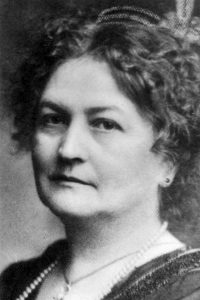
In 1914, Minnie joined Marie Bankhead Owen to establish the Press and Authors’ Club of Montgomery. It was Montgomery’s first professional organization for women writers.
Marjorie Sayre Brinson
2 July 1885 – 10 April 1960
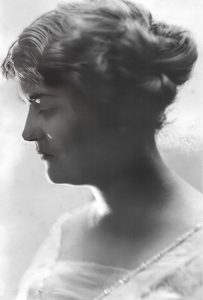
Marjorie Sayre Brinson, the eldest Sayre child and most conventional daughter, graduated as valedictorian from Girls’ High School in 1904 and received the Sophie Newcomb scholarship to train as a teacher. She taught elementary school in Montgomery before marrying Minor Brinson in 1908. An avid bridge player, she often hosted bridge parties. After Judge Sayre’s death in 1931, her mother, Minnie, moved next door to Marjorie on Sayre Street, where Zelda Fitzgerald later also lived. Marjorie faced significant losses in her last years, including her daughter Noonie in 1953, her husband in 1954, and her mother in 1958. Despite being seen as nervous by some, she was the steadfast sister who held the Sayre family together. Marjorie passed away in 1960.
Marjorie “Noonie” Brinson Godwin
15 March 1909 – 1 January 1953
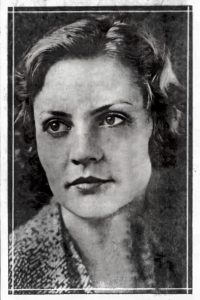
Noonie was the daughter of Marjorie and the niece of Zelda, who often cared for her during childhood. As they grew older, Noonie became one of Zelda’s close friends, and they frequently played tennis together and traveled in 1931-1932. Sadly, Noonie passed away at 44 from an undisclosed illness. Her daughter, Marjorie Sayre Noble Godwin, later served as an early board member and a generous donor to the Scott and Zelda Fitzgerald Museum.
Rosalind Sayre Smith
26 September 1889 – 15 September 1979
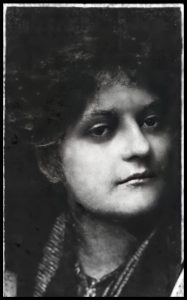
Zelda, inspired by Rosalind’s independence, portrayed her in her novel Save Me the Waltz as the unconventional character Dixie. Rosalind’s strained relationship with F. Scott Fitzgerald during Zelda’s hospitalization also influenced literature, as their tensions affected family dynamics, as evidenced by Scott’s 1931 story “Babylon Revisited.”
In her later years, Rosalind formed a close bond with her niece, Scottie, after Scottie returned to Montgomery, and they maintained their relationship until Rosalind’s death in 1979.
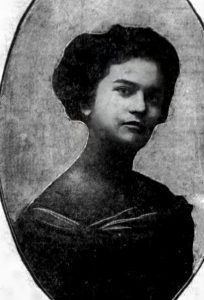
Clotilde Sayre Palmer
17 August 1892 – 1986
The Bankheads
Marie Bankhead Owen
September 1869 – 1 March 1958
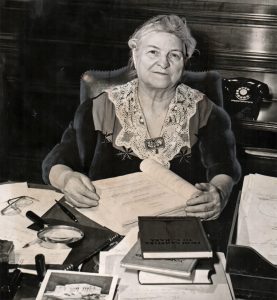
Born on Bankhead Plantation in Noxubee County, Mississippi, to U.S. Senator John Hollis Bankhead and Tallulah J. Brockman Bankhead, she was the sister of Senator John H. Bankhead Jr. and Congressman William B. Bankhead (father of actress Tallulah Bankhead, making Marie Tallulah’s aunt). After the family settled in Alabama, Marie was educated at home, at the State Normal School in Livingston, and later at Ward’s Seminary in Nashville.
From 1910 to 1917, she worked at the Montgomery Advertiser, managing the Women’s Society page and writing the advice column Talks with Girls.
Tallulah Bankhead
31 January 1902 – 12 December 1968
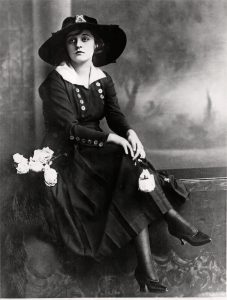
Born in Huntsville, Alabama, Tallulah was the daughter of William B. Bankhead (later Speaker of the U.S. House) and granddaughter of Senator John H. Bankhead. After her mother died of blood poisoning shortly after her birth, her father sent her and her sister, Eugenia, to live with their grandparents in Jasper and their aunt in Montgomery. There, Tallulah, already dramatic and attention-seeking, formed a friendship with Zelda Sayre, another spirited Southern girl.
At sixteen, with her family’s hesitant approval, Tallulah moved to New York City after winning a beauty contest that included a screen test. She quickly entered Broadway and dominated London’s West End in the 1920s with plays like Fallen Angels and The Green Hat, becoming a sensation with her captivating performances and scandalous antics.
Margaret Booth & Students
Margaret Booth
21 September 1880 – 14 August 1953
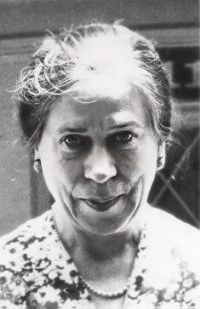
By 1906, Booth returned to Montgomery to teach at Sidney Lanier High School. In 1914, at age 34, she founded the Margaret Booth School for Girls in her home at 529 Sayre Street, transforming it into an academy that rivaled elite Northern institutions. The school’s motto, adapted from Seneca, was “Non scholae sed vitae discimus” (“We learn not for school but for life”).
Sara Haardt Mencken
1 March 1898 – 31 May 1935
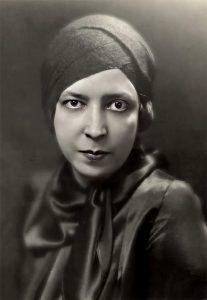
Sara Mayfield
10 September 1905 – 15 January 1975
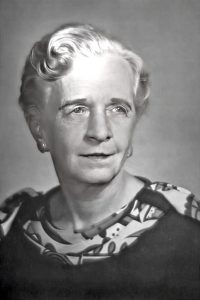
Born in Tuscaloosa, Alabama, she was the daughter of Alabama Supreme Court Justice John Jefferson Mayfield and Annie “Susie” Tankersley Mayfield. Though her early years were rooted at the family’s Idlewyld estate in Tuscaloosa, she spent much of her childhood in Montgomery, immersed in its vibrant social circle alongside Tallulah Bankhead, Sara Haardt, and Zelda Sayre. A precocious diarist from age five and a headstrong girl who rebelled against Southern norms for “well-behaved little ladies,” Mayfield won a national short-story contest sponsored by The American Mercury as a student at Goucher College in 1923. The prize: the opportunity to meet H. L. Mencken.
Anne Wilson Goldthwaite
Anne Wilson Goldthwaite
28 June 1869 – 29 January 1944
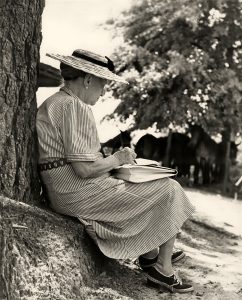
While visiting her in Montgomery, Anne Goldthwaite’s uncle, Henry Goldthwaite, offered to support her art studies for ten years if she moved to New York City. She enrolled at the National Academy of Design to study etching and painting. In 1906, she traveled to Paris, where she met Gertrude Stein, who introduced her to a circle of modern artists like Matisse and Picasso. Goldthwaite later joined the Academie Moderne, where she showcased her work at spring exhibitions.
ZELDA’S MONTGOMERY
1900 – 1948
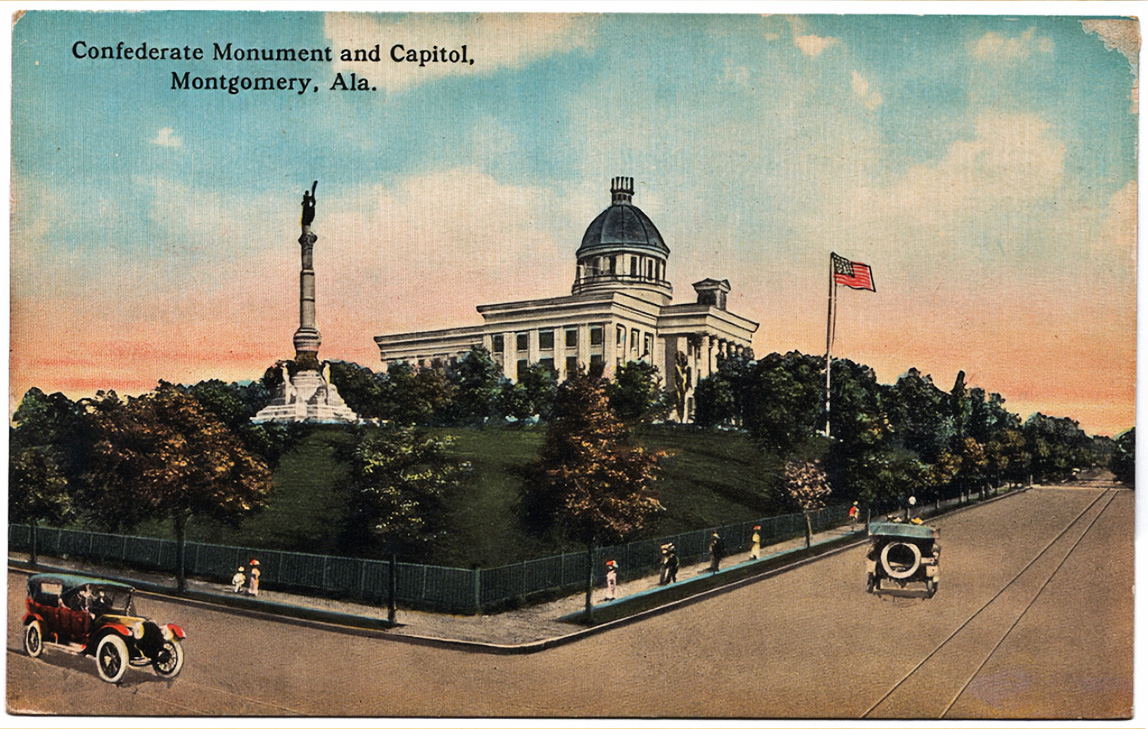
Montgomery Capitol
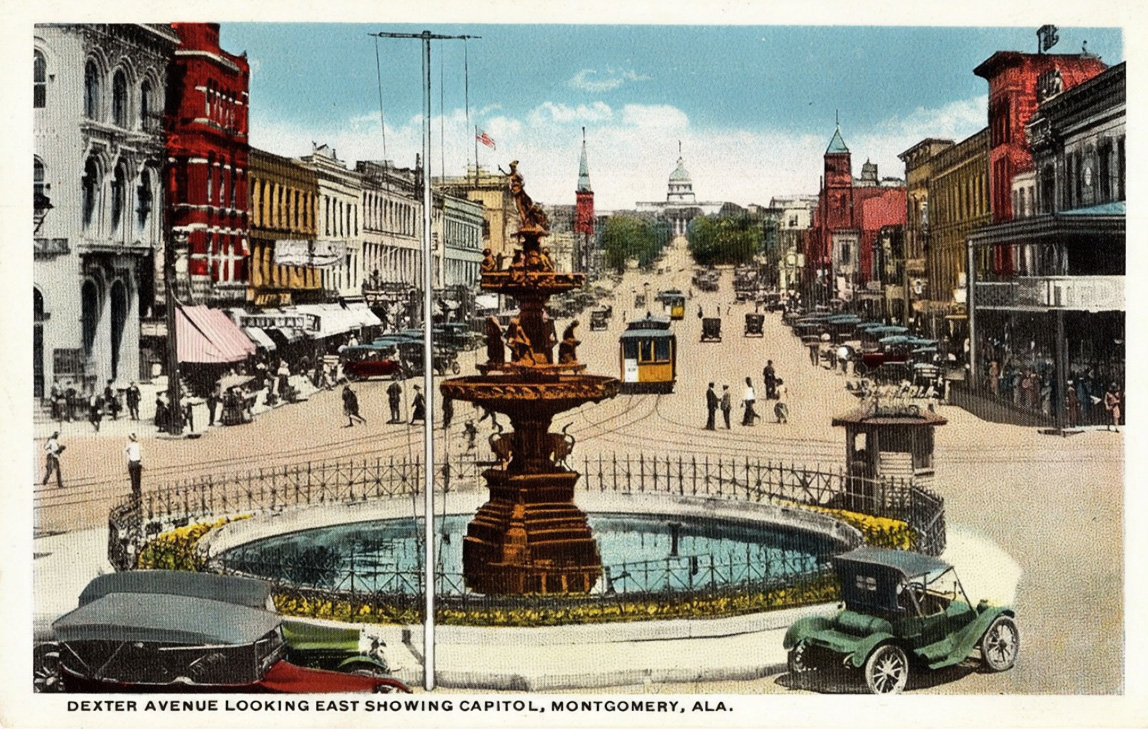
Dexter Avenue
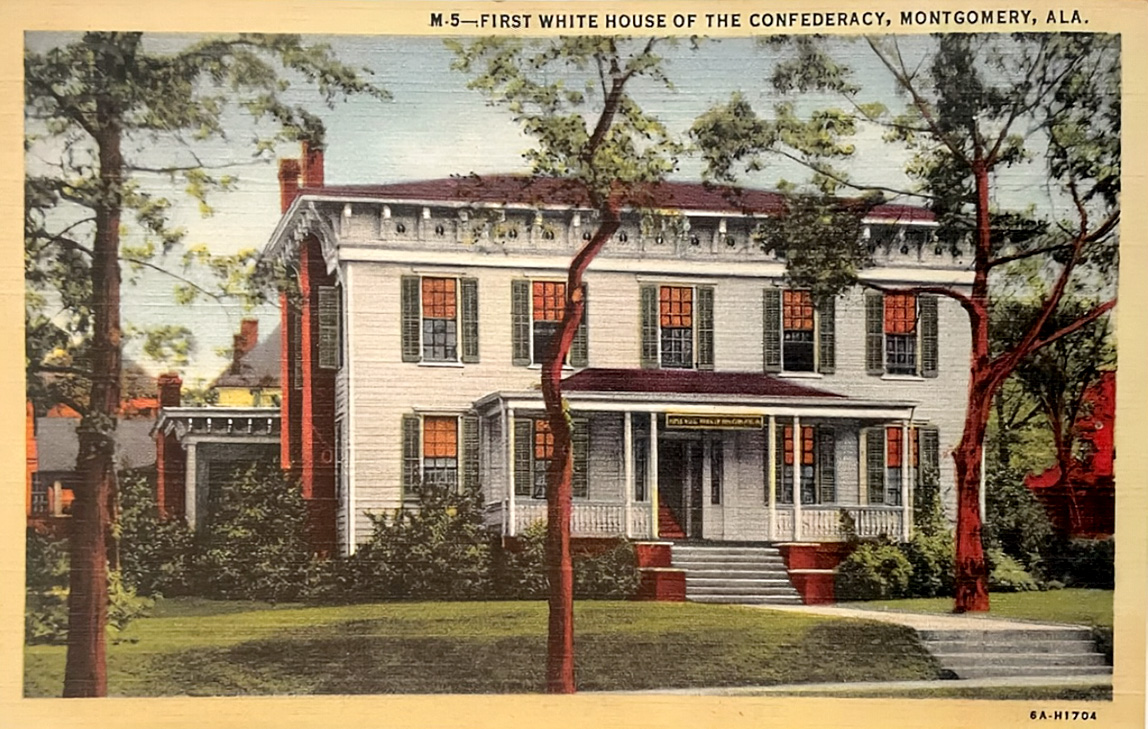
First White House of the Confederacy
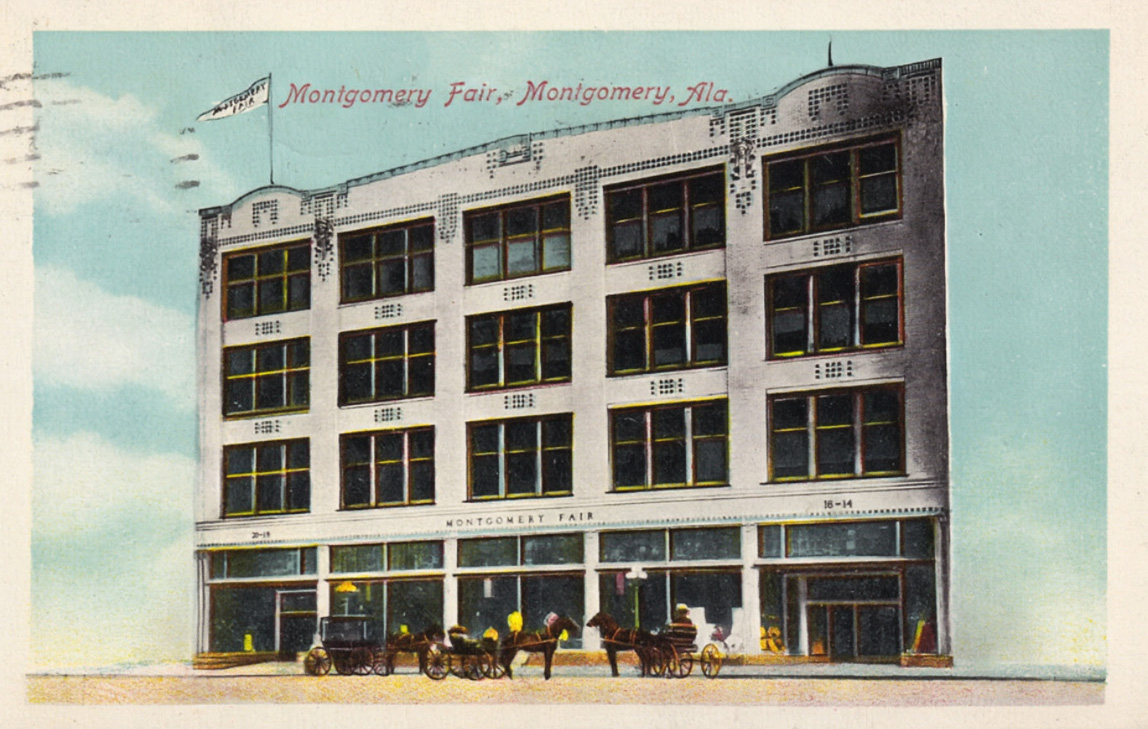
Montgomery Fair
Montgomery Country Club
Sidney Lanier High School
The Alabama State Capitol Building
600 Dexter Avenue
From 1900 to 1948, the Alabama State Capitol on Goat Hill served as more than just the seat of government for the Sayre and Bankhead families; it felt like home. Judge Anthony Dickinson Sayre, known as “the Judge,” occupied chambers on the second floor from 1909 until his retirement in the early 1930s. Nearby was his friend, Judge John J. Mayfield, Sara Mayfield’s father. On the ground floor, Marie Bankhead Owen and her husband, Congressman Thomas M. Owen, developed a premier state archives system, with Marie leading it for thirty-five years after Thomas’s death in 1920. The Capitol was enchanting for their daughter, Zelda Sayre, who explored it freely with her friend Tallulah Bankhead, the daughter of William B. Bankhead, a rising politician. The two girls, vibrant and theatrical, treated the grand building like their own playground, sliding down stair rails and dancing on the steps.
Dexter Avenue
The Lightning Route Street Cars
The Lightning Route, launched in April 1886, was the first citywide electric streetcar system in the U.S. Operated by the Capital City Street Railway Company in Montgomery, it earned its name from its speed of 12–15 mph and the bright electric arcs from trolley poles at night. It began with a single line from Court Square to the city limits, using 500-volt direct current from a coal-fired steam plant. The cars, built by Jones Car Works, were bright yellow, featured “Lightning Route” on the dashboard, and could carry up to 40 passengers. By the early 1890s, the system expanded to five lines covering about 20 miles.
Fares for the Lightning Route were a nickel (half-price for schoolchildren), and service operated from 6 a.m. to midnight. It quickly became Montgomery’s social and commercial backbone, facilitating the development of suburbs like Cloverdale and the Garden District. The system peaked in the 1920s, with more than 60 cars, but declined as automobiles and buses gained popularity. The last trolley ran on April 19, 1936, exactly fifty years after the first electric trip. Tracks were removed, cars were scrapped, and the overhead wires came down. Today, remnants include exposed rail sections during roadwork, the restored 1909 Brill car No. 33 at Union Station, and the affectionate use of “Lightning Route” by locals along Dexter Avenue toward the Capitol. Local lore has both Zelda and Tallulah commandeering the streetcars along Dexter Ave., with Zelda driving one off the tracks.
William Sayre Family Home: The First White House of the Confederacy
644 Washington Avenue
The William Sayre family home, built between 1832 and 1835 in Montgomery, Alabama, is one of the city’s earliest elegant residences. Constructed in the Federal style by merchant William Sayre, it features weatherboard siding and a hipped roof. In the 1850s, it was remodeled in the Italianate style by J.G. Winter, adding columns and a balustrade.
As Montgomery became the provisional capital of the Confederacy, the house earned the nickname “First White House of the Confederacy.” In February 1861, the Confederate Congress leased it for Jefferson Davis and his family. They lived there until the capital shifted to Richmond in May 1861. After the war, it returned to private ownership and passed through several families until the late 1890s, when preservation efforts began.
In 1919, the house was relocated to 644 Washington Avenue with funding from the Alabama Legislature and opened as a museum in 1921. Today, it is a National Historic Landmark and community museum, offering guided tours that evoke the home’s dual legacy.
Montgomery Fair
Entrances at Court Square, Dexter Avenue, and Monroe Street
Montgomery Fair was a prominent department store in downtown Montgomery for much of the 20th century, located at the corner of Dexter Avenue and Perry Street. Founded in 1888 by Emanuel Lehman and Morris Maier, it became known as Montgomery Fair in 1899 and emerged as the city’s leading retailer of clothing and luxury goods. The store flourished from the 1920s to the 1950s under the Maier and Pake families and was housed in a striking six-story Art Deco building completed in 1929, featuring Alabama’s first escalators and a popular tearoom. Zelda Fitzgerald once lost her daughter in the crowded aisles, describing the experience as “ghastly.” Rosa Parks worked there as a seamstress in the early 1950s before her historic act in 1955. Montgomery Fair maintained segregated facilities until the early 1960s when it integrated. The flagship closed in the 1990s, and the restored building now houses the Montgomery Area Chamber of Commerce and other offices.
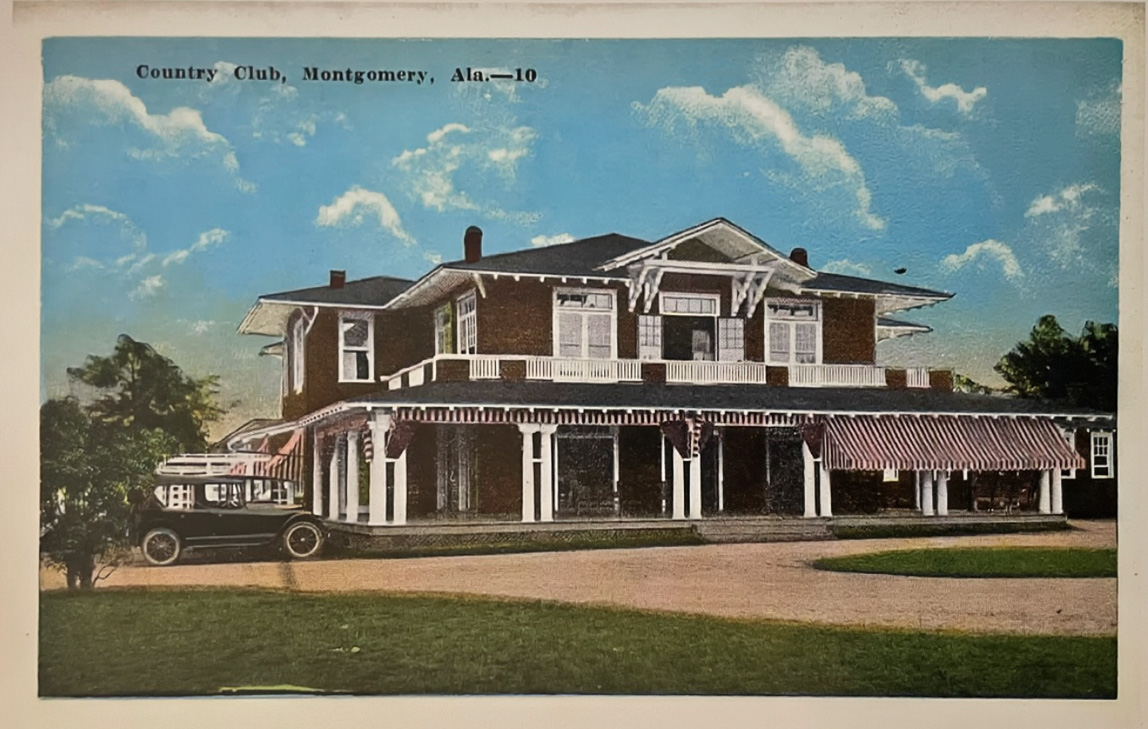
Montgomery Country Club
Then at Carter Hill Road and Narrow Lane
Zelda and Scott met at a country club dance in Montgomery, Alabama, in July 1918. The Montgomery Country Club stood then at the upper end of Narrow Lane Road (today the approximate site of a Sonic Drive-In).
Both writers later drew on memories of the rambling and rustic clubhouse and its grounds. Scott featured it as the setting for his 1920 short story “The Jelly-Bean” (an important early sketch for The Great Gatsby), while Zelda vividly recalled the same place in her 1932 novel Save Me the Waltz. The original clubhouse burned to the ground on February 15, 1925. The club relocated to its present site at Fairview and Narrow Lane Roads and has undergone several renovations and rebuilds.
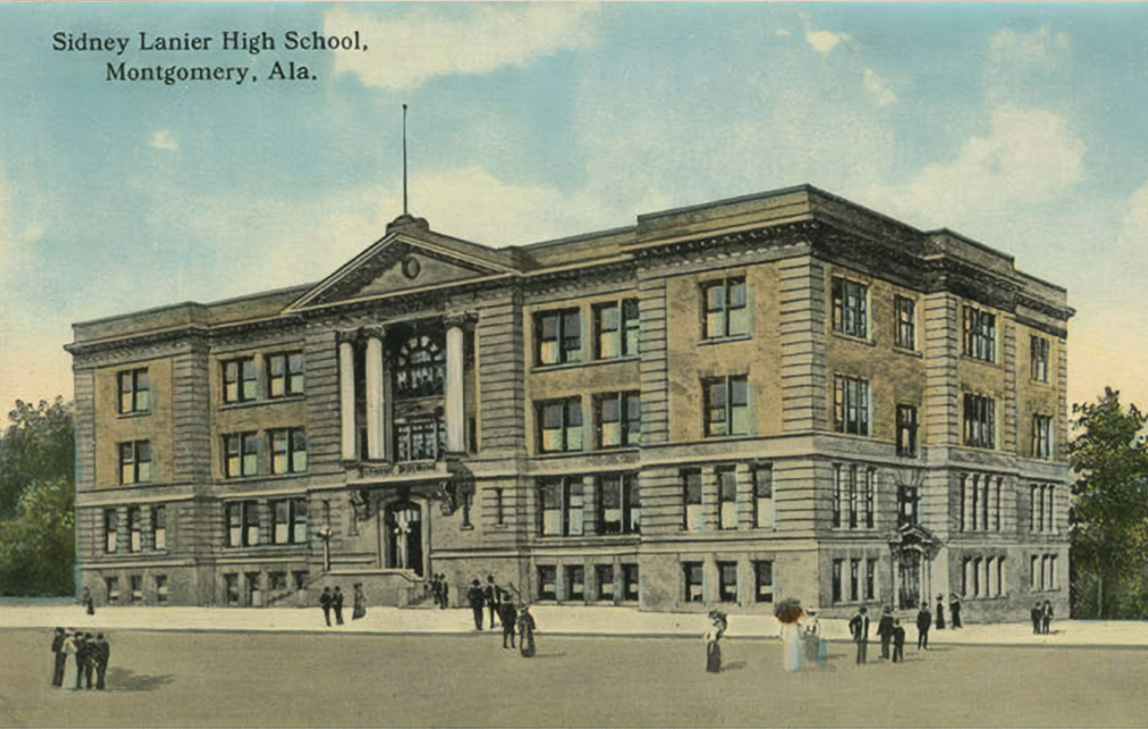
Sidney Lanier High School
410 McDonough Street
Sidney Lanier High School, initially known as Montgomery High School, opened in 1910 at 410 McDonough Street in downtown Montgomery. The impressive red-brick building quickly became the city’s top public high school and was renamed in 1920 to honor Alabama poet Sidney Lanier. Zelda attended Lanier from 1914 to 1918, gaining recognition as a talented dancer and actress. In the early 1930s, Hiram “Hank” Williams Sr. attended junior high classes in the same building.
In 1929, Lanier High School moved to a new campus on South Court Street, while the original building became Baldwin Junior High School in 1932, honoring Dr. Benjamin James Baldwin. Today, the 1910 structure stands with its former gymnasium restored as the Zelda Sayre Fitzgerald Studio, in tribute to its most famous graduate and her influence on American literature and culture.
Click to preorder/purchase.
The book will be available at the end of February.