Current Exhibit
MONTGOMERY, ALABAMA: MILITARY & AVIATION, 1819 – 2026
Feature Exhibit, Figh-Pickett House
October 13 through December 23
9 a.m. to 4 p.m. Tuesday through Thursday
Closed on Federal Holidays
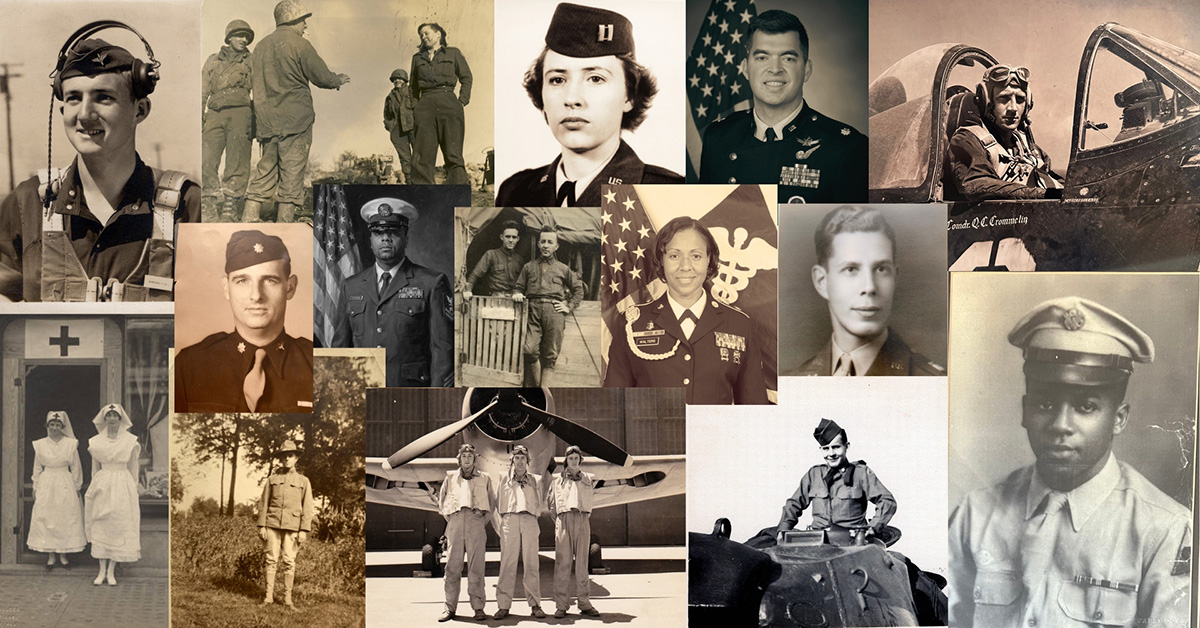
Our third and final exhibit of the year highlights Montgomery, Alabama’s enduring legacy as a cornerstone of military and aviation history. Established in 1819 in honor of American Revolutionary War hero General Richard Montgomery, the city has consistently served as a strategic military outpost. After serving as the Confederate capital in 1861 during the Civil War, Montgomery established itself as a premier center for aviation training and advancement. Its aerial heritage began with the Wright Brothers’ flight school in 1910. Today, Maxwell-Gunter Air Force Base hosts Air University, training top Air Force leaders and reinforcing the city’s vital, ongoing role in national defense.
With every exhibit, we strive to spark interest in Montgomery’s history and motivate members and visitors to explore local and regional historical sites and attractions.
MCHS thanks the following friends and partners for their exhibit contributions, temporary loans, and assistance in making this exhibit and programming possible: Alabama Humanities Alliance; City of Montgomery; Jerome Dees; Dixie Art Colony Foundation; Alaina Doten; Jeff Dutton; Mark Harris; Laura Hill; Montgomery County Commission; Cathey O. Watts; and the members of the community who shared personal photos of military family members.
EXHIBIT PROGRAMS & EVENTS
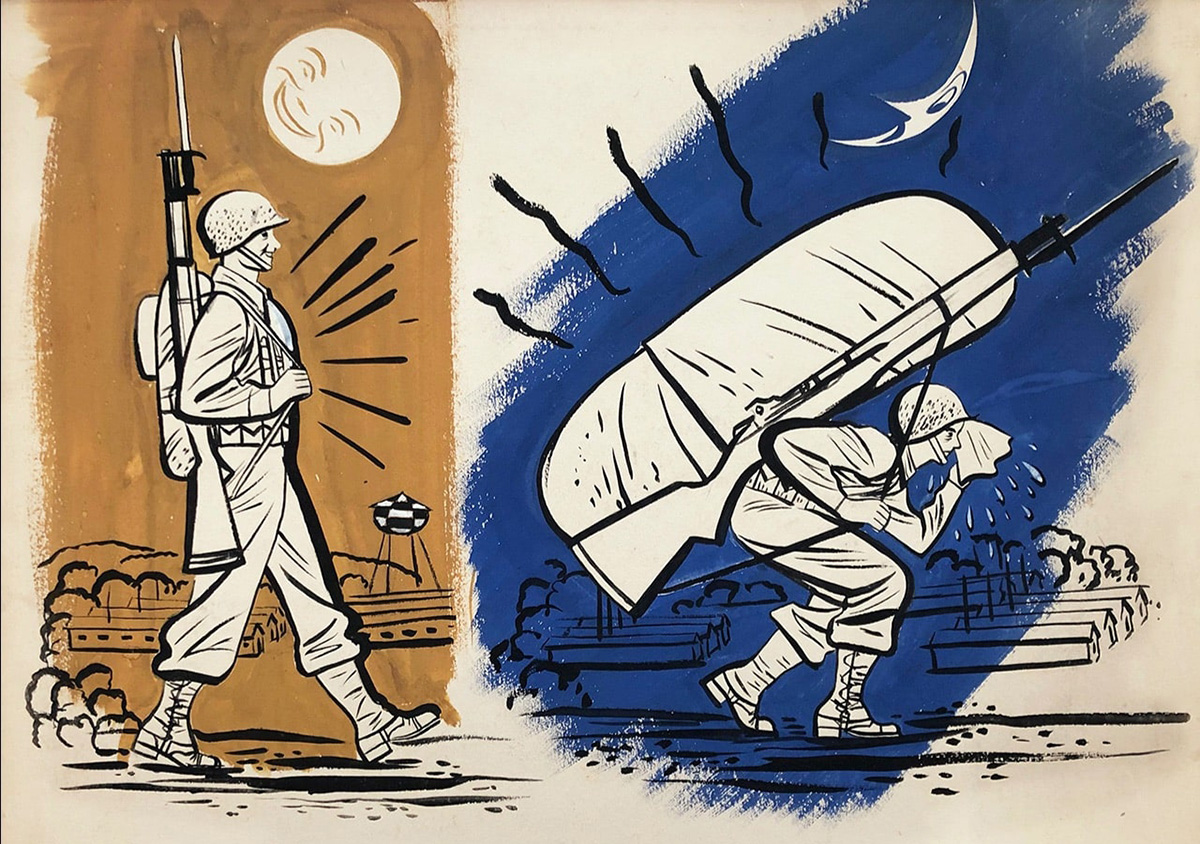
Image: Arthur Walter Stewart, “untitled” gouache on illustration board, Dixie Art Colony Foundation Collection
Unless otherwise noted, the PROGRAMS ARE FREE AND OPEN TO THE PUBLIC, thanks to support from the Alabama Humanities Alliance, the City of Montgomery, and Montgomery County Commission. For questions contact Aleah Goode at 334.264.1837, or by email at aleahgoode@mchsal.org.
Brown Bag Lunch and Learn
Wednesday, October 21, from 11:30 a.m. to 1 p.m.
Feel free to bring your sack lunch and join us as speaker Laura Hill, Communications Editor, Encyclopedia of Alabama, shares the stories of the Montgomery Motor Corps and its volunteer women drivers that provided a variety of support for troops stationed at Fort Sheridan during World War I.
Exhibit Opening Reception
Thursday, November 5, from 5 to 6:30 p.m.
Brown Bag Lunch and Learn
Wednesday, November 18, from 11:30 a.m. to 1 p.m.
Feel free to bring your sack lunch and join us as speaker Jerome Dees, a retired Air Force navigator and JAG officer, now a law professor at Jones School for Law, shares his stories and memories from his life as a military child and as an officer.
Winter Open House
Saturday, December 12, from 10 a.m. – noon
Storytelling by Joseph Trimble, local artists, and refreshments.
MONTGOMERY MILITARY & AVIATION HISTORY TIMELINE
Key Events from the City’s Founding through the Modern Era
Foundations and the Civil War
1819 — City Founded. Montgomery was incorporated on December 3 and named for Revolutionary War general Richard Montgomery.
1846 — State Capital Relocated. Alabama moved its capital to Montgomery’s Goat Hill.
February 1861 — Confederate Government Organized. Delegates met in Montgomery to establish the Confederate States of America.
February 18, 1861 — Jefferson Davis Inaugurated. Davis took the oath at the Alabama State Capitol.
February–May 1861 — First White House Occupied. The Davis family lived in the executive residence for about three months.
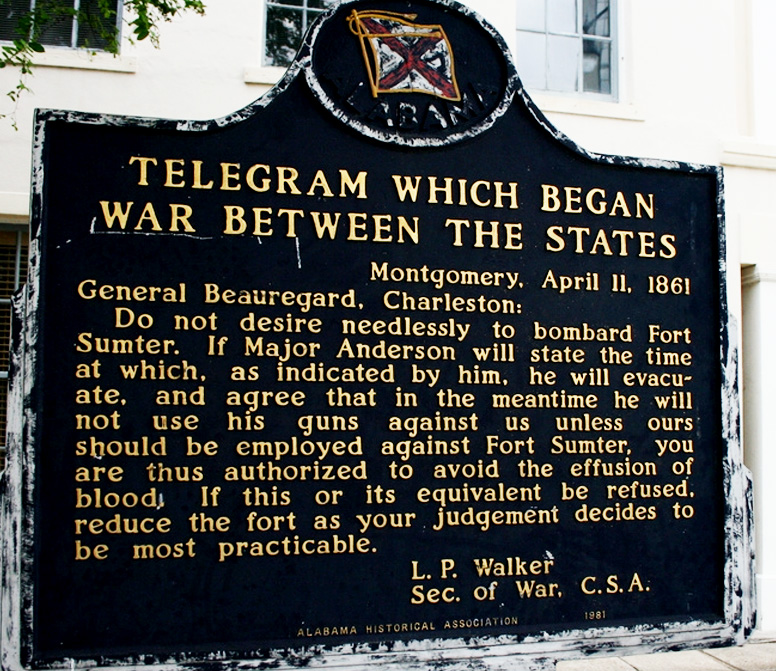
April 11, 1861 — Fort Sumter Order Transmitted. The Winter Building telegraph office sent authorization for the bombardment.
April 1865 – The Union Army command made Figh-Pickett House its headquarters.
World War I and the Rise of Aviation
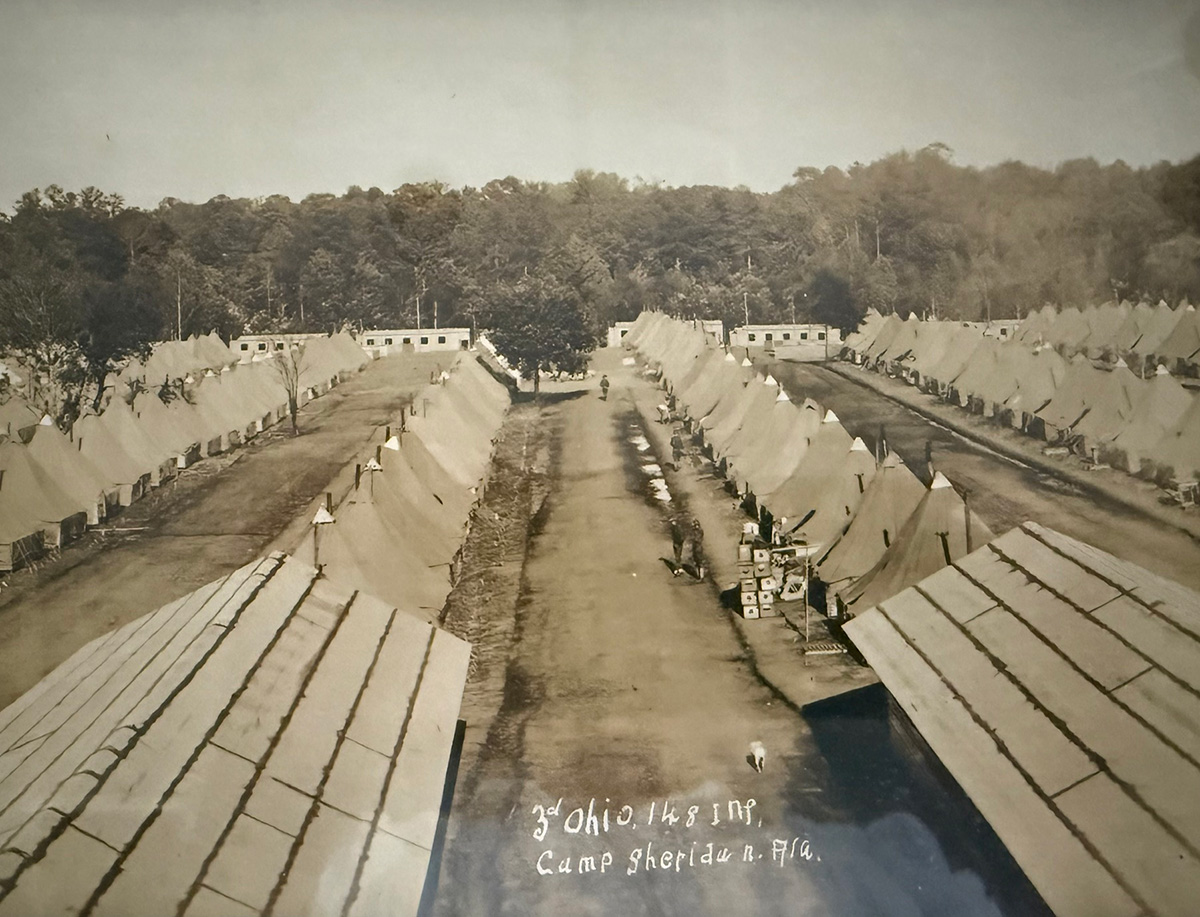
Image: Camp Sheridan, MCHS Collection
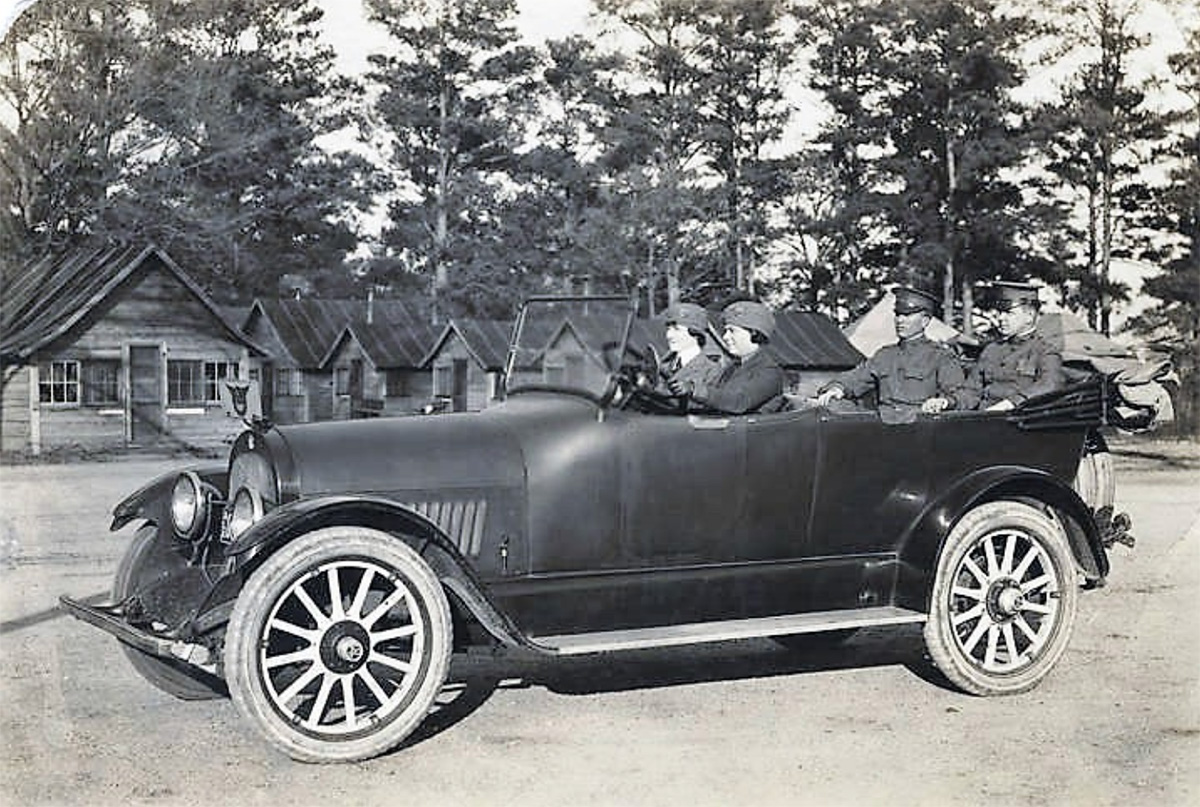
Image: Courtesy of Alabama Department of Archives and History Collection. Montgomery Motor Corps, local women transported soldiers and supported camp operations.
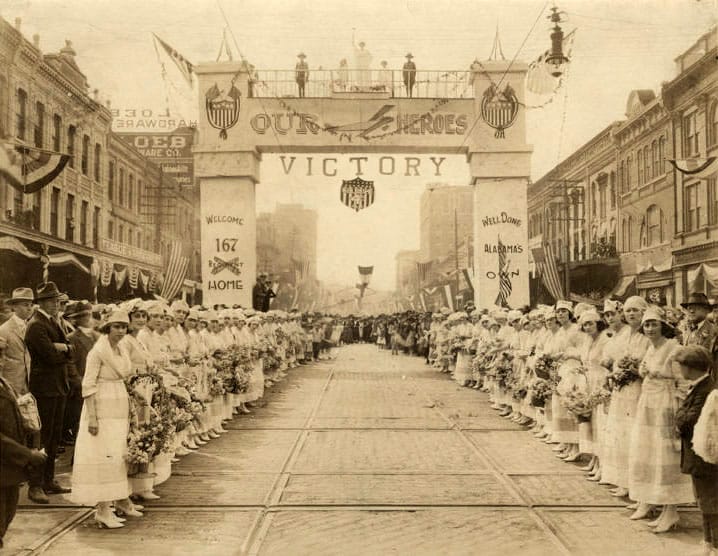
Image: Courtesy of Alabama Department of Archives and History Collection. City parade 1917, 3,600 Alabama National Guardsmen left Union Station for service with the 42nd “Rainbow” Division.
November 1917 — Taylor Field Established. Montgomery’s first military flying installation trained 139 pilots before closing in April 1919.
July 1917 — Camp Sheridan Established. About 30,000 soldiers of Ohio’s 37th “Buckeye” Division trained in north Montgomery.
August 28, 1917 — 167th Infantry Departs. More than 3,600 Alabama National Guardsmen left Union Station for service with the 42nd “Rainbow” Division.
1917–1918 — Fitzgerald Meets Zelda. Lt. F. Scott Fitzgerald met Montgomery native Zelda Sayre while stationed at Camp Sheridan.
April 1918 — Montgomery Motor Corps Formed. Local women transported soldiers and supported camp operations.
April 1918 — Aviation repair Depot Opens. Aircraft and Engine Repair Depot No. 3 began Montgomery’s permanent military aviation presence.
1918–1919 — Demobilization. Camp Sheridan processed returning troops before closing.
Between the Wars
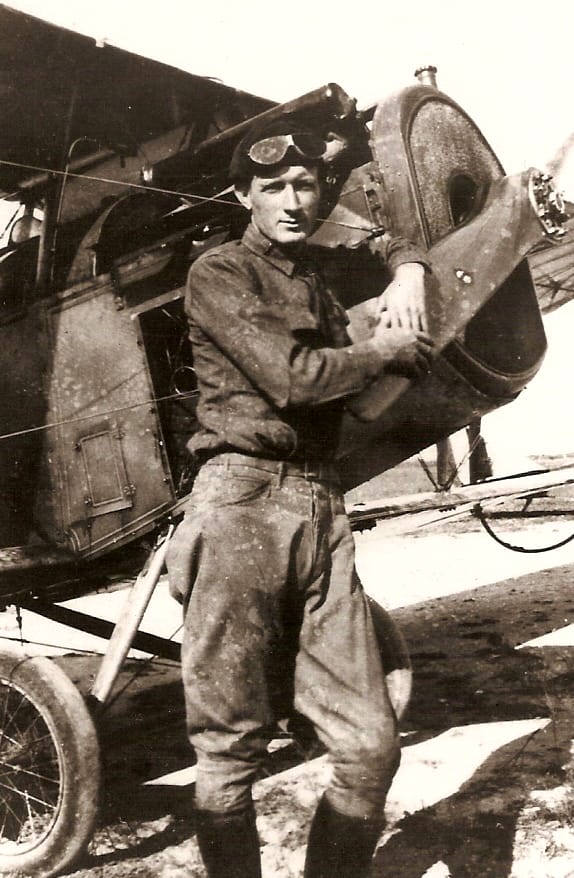
Image: Courtesy of Air University, Office of History, Lt. William C. Maxwell, Maxwell Field named in his honor.
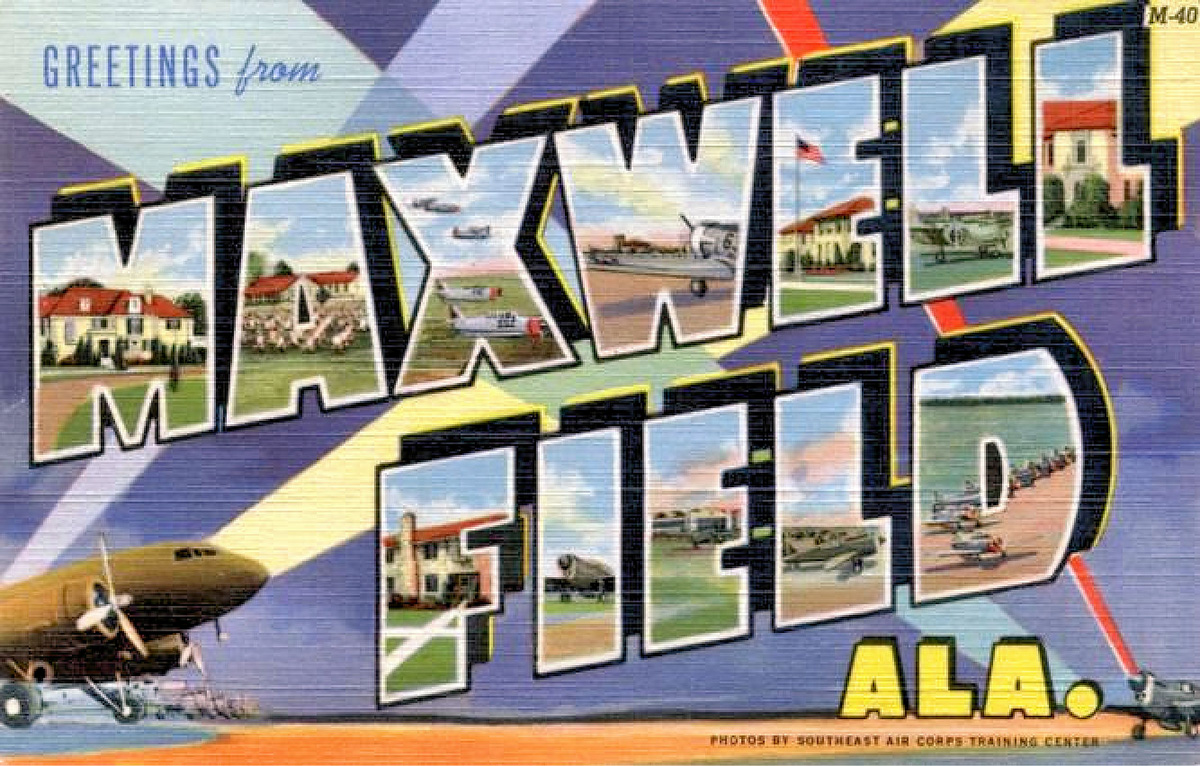
Image: MCHS Postcard Collection
1920–1922 — Depot Preserved. Civic and congressional support kept the aviation installation open despite postwar downsizing.
November 8, 1922 — Maxwell Field Named. The installation honored 2nd Lt. William C. Maxwell.
1931–1940 — Air Corps Tactical School. The school developed influential doctrine for high-altitude daylight precision bombing.
World War II
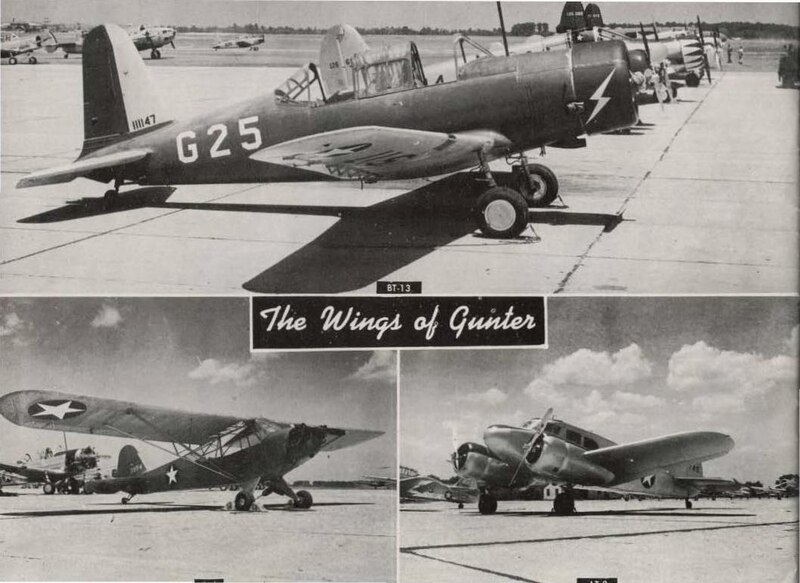
Image: MCHS Postcard Collection (?)
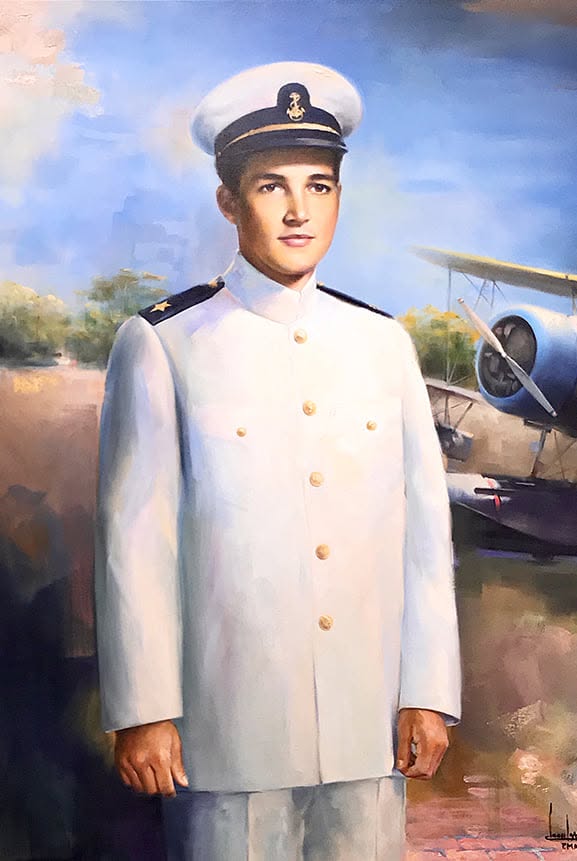
Image: Ensign Clarence Moore Dannelly Jr., Dannelly Field named in his honor. Painted by local Alabama artist Jackie Altman Raborn.
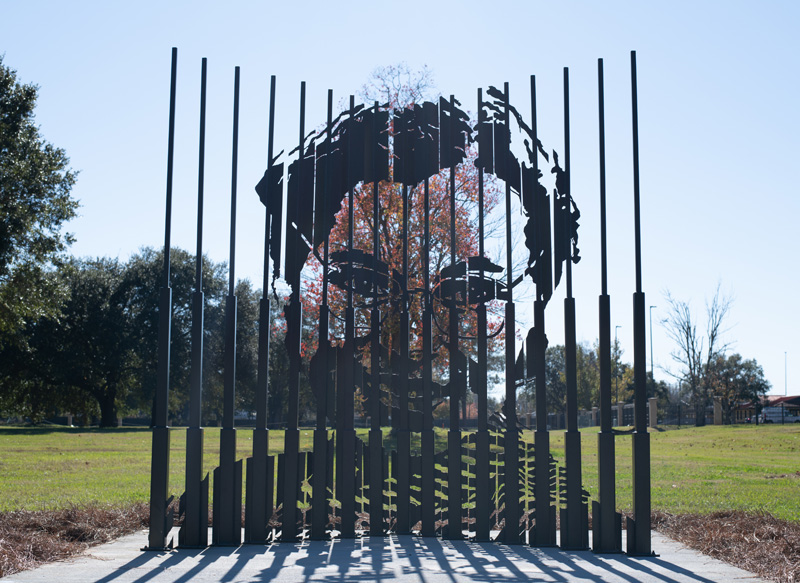
Image: Courtesy of Senior Airman Charles Welty. Sculpture, 'Opening Eyes', created by artist Ian Mangum.
1940 — Southeast Training Headquarters Established. Maxwell oversaw flight instruction across the region.
1940–1941 — Gunter Field Created. Montgomery’s municipal airport became an Army training base.
1941–1945 — Allied Pilots Trained. Maxwell and Gunter trained tens of thousands of American and Allied flying cadets.
1941 — Rosa Parks Works at Maxwell. Parks served as a seamstress at the Maxwell Field Guest House.
1943 — Dannelly Field Named. The airport honored Navy pilot Clarence Moore Dannelly Jr., remembered as Montgomery’s very first casualty of World War II.
Cold War to Present
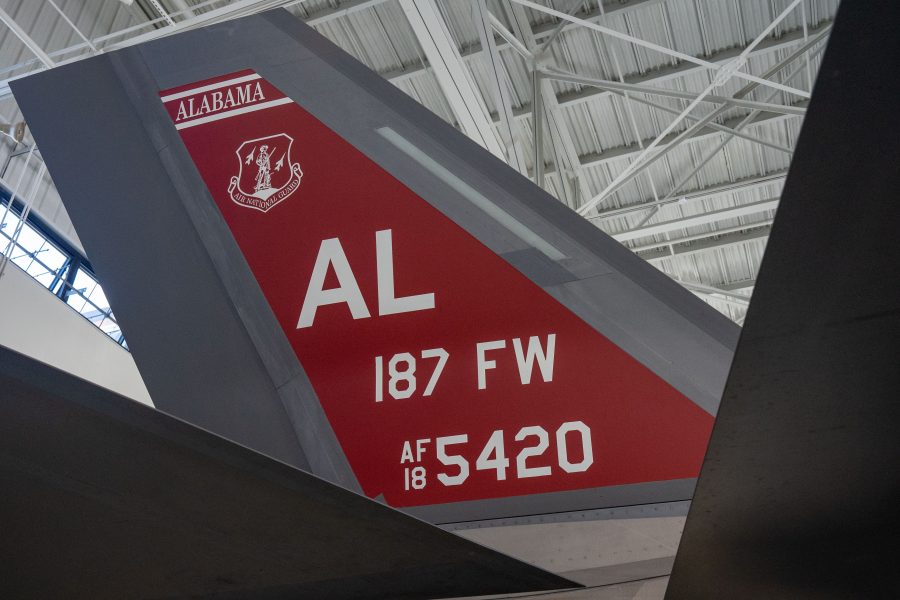
Image: Courtesy of Air & Space Forces Magazine (January 2024). Stationed at Dannelly Field, Alabama, an F-35A Lightning II assigned to the 187th Fighter Wing displays a custom tail flash. This aircraft features a specialized design paying tribute to the Red Tails and Tuskegee Airmen.
1946 — Air University Established. Maxwell became a center for Air Force professional military education.
September 1947 — Maxwell Air Force Base. Maxwell Field was redesignated after the Air Force became an independent service.
1957–1966 — SAGE Air-defense Center. Gunter supported early warning against long-range aerial threats.
1972 — Community College of the Air Force Founded. The college provided accredited education for enlisted Airmen.
1992 — Maxwell and Gunter consolidated. Gunter became an annex of Maxwell.
1993 — Air University Joins AETC. The university became part of the Air Education and Training Command.
21st Century — Modern Combat Aviation. The 187th Fighter Wing carries the “Red Tails” legacy but converted to the F-35A Lightning II.
Present — Education, Cyber, and Flight Training. Maxwell-Gunter supports military education, logistics, enterprise systems, and MH-139A aircrew training.
PLACES TO EXPLORE
These sites connect the timeline to historic aircraft, military service, state history, and preserved landmarks.
Air Force Enlisted Heritage Hall — Enlisted service history at Gunter Annex.
Maxwell Historic Air Park — Outdoor display of military aircraft at Maxwell AFB.
Alabama War Memorial — Downtown memorial honoring Alabama veterans.
Fort Toulouse–Fort Jackson — Reconstructed French and American forts near Wetumpka.
Museum of Alabama — State history collections near the Capitol.
First White House of the Confederacy — Preserved 1861 executive residence.
Alabama State Capitol — Site of major Civil War-era events.
MCHS Historical Markers — Local markers documenting Montgomery history.